Elastic held a ‘Capture The Bug’ event on September 29th, in the run-up to ElasticON. I love these scenario-based events; they provide much more realistic data and you can dig into a close-to-real-world scenario to really get to grips with the stack.
It was a live event with around 40 people on a Zoom call led by Tim Brophy from Elastic. It began with a brief introduction to the observability tools in The Elastic Stack, including a bit of training for anyone who wasn’t familiar to the topic or the stack.
All participants were provided with access to a lab environment that had a microservice-based web application and various data stores. All services were being monitored with Elastic Observability. The various applications were supported by Elastic’s Application Performance Monitoring (APM) tools and there was a traffic generator to constantly hit the application and generate load. An Elasticsearch cluster received all this data, and participants were set several challenges to complete.
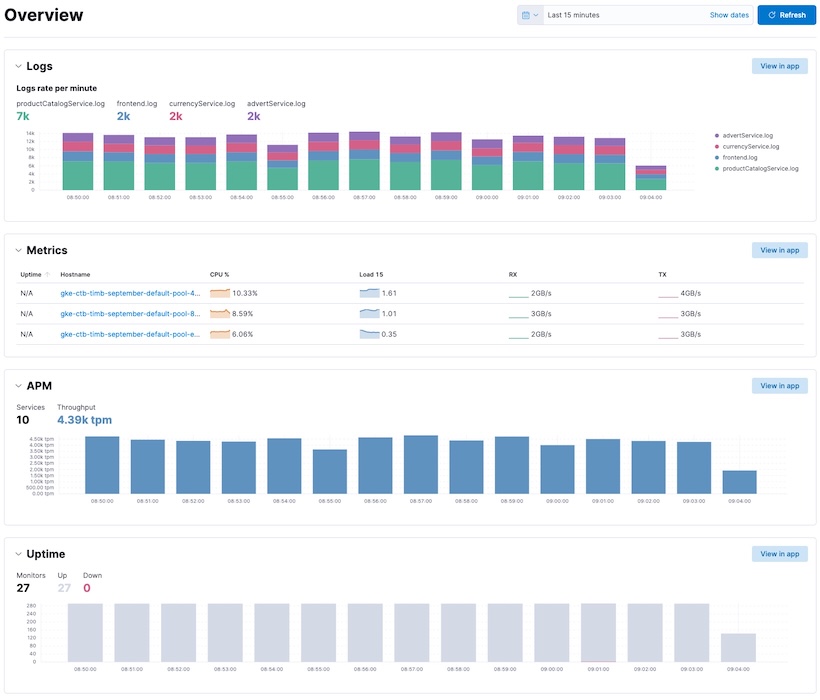
Each challenge started with the host deliberately deploying a bug or broken configuration to the environment. The participants then had ten minutes to track down what had happened and, for bonus points, coming up with a way to fix it. The host provides lots of hints for where to look to find the answers, as there were people in the competition who hadn’t used the tools at all before this event.
The challenge threw up a couple of issues with the observability tools. The main Services page, for example, always shows the error rate as N/A, even when the service is throwing errors. There are other places to discover services throwing errors but it’s not consistent through the platform.
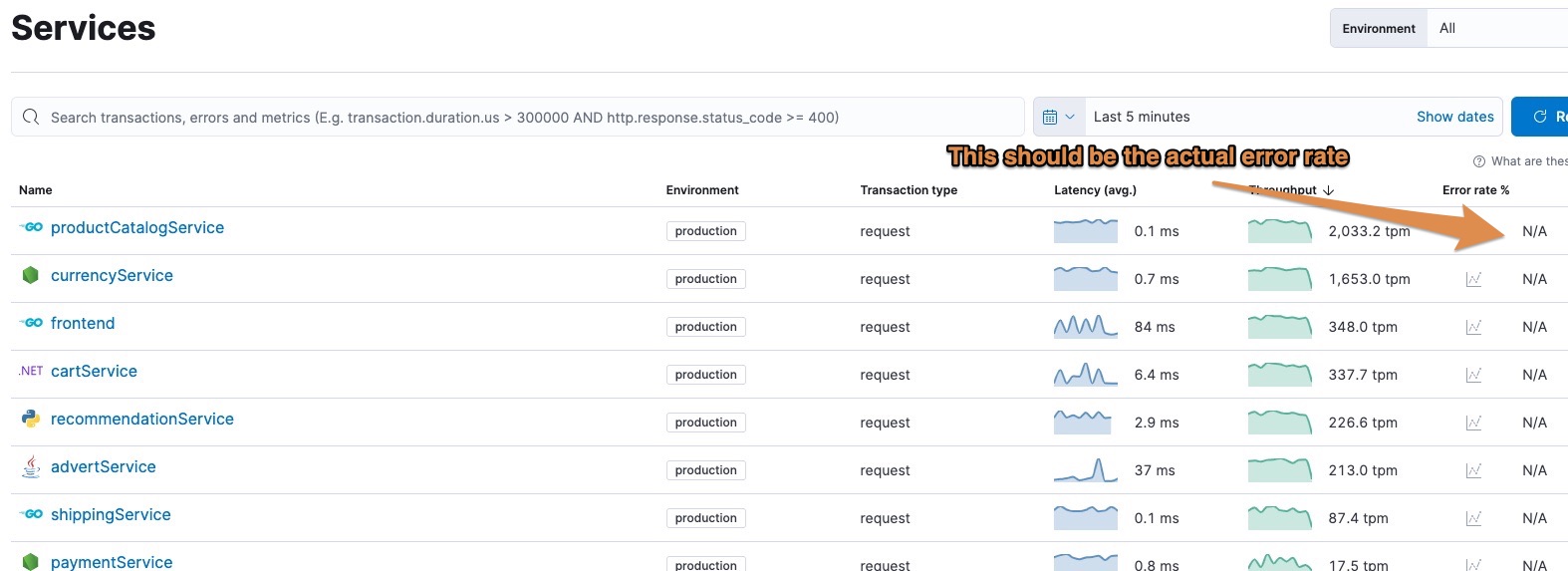
There are other things that could be simplified, such as navigating from application to application (Services to Logs, for example), and reducing noise in the logs application. Overall, however, there’s a lot of powerful and useful functionality available.
We skipped one of the challenges but the competition still lasted around two hours. Everyone entered their answers on a Google Form and the hosts marked everything at the end of the event. I ended up coming second and got a bit of swag in the post!
The challenges were great fun and are a really good way to get an introduction to Elastic’s observability tooling in a pre-defined environment. Elastic host these competitions fairly frequently and I’d recommend enrolling on one if you have the opportunity. I can imagine the challenges being even more entertaining when hosted in a real-life setting, with food and friendly rivalry!
I really like Elastic’s observability tools. They’re easy to deploy and provide a lot of very useful information. I have installed, configured, and deployed it at two customer sites and the customers were thrilled with the data they were getting, which becomes even more useful when complemented by alerting!